
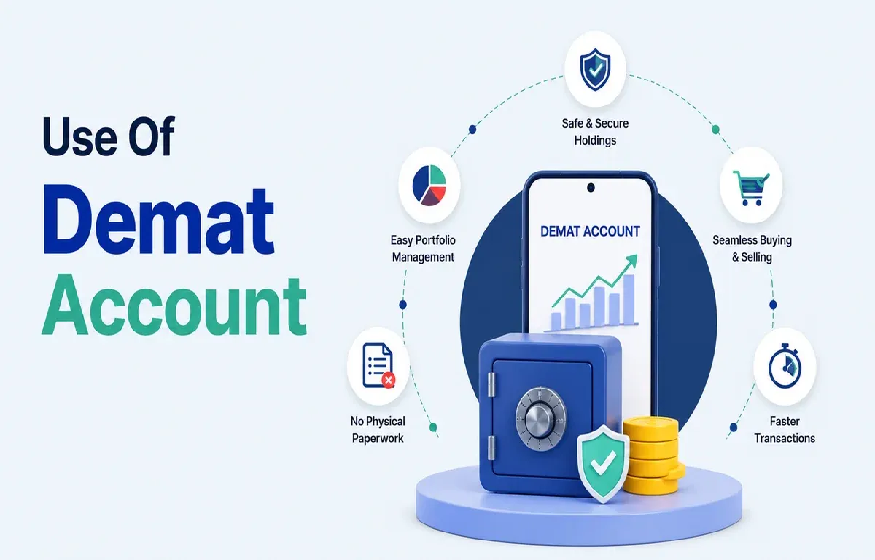
Ask most new investors what it costs to buy and hold shares in India, and the typical answer focuses narrowly on brokerage fees charged per transaction. In reality, the true cost structure behind using modern Trading Apps and maintaining a Demat Account involves a considerably more layered set of charges, many of which remain poorly understood even among investors who have been active in the market for several years. Gaining clarity on this complete cost picture, rather than focusing solely on the most advertised fee, allows investors to make more accurate comparisons between providers and better anticipate the ongoing expenses associated with market participation.
Brokerage Charges and How They Have Evolved
Brokerage fees applicable to each buy/sell of securities have changed significantly in the last ten years. Several providers charge zero or minimal brokerage on equity delivery trades (shares are not squared off on the same day), but intraday trades, trades on derivatives and other specialised segments often involve entirely different fee calculations, based on a percentage of the value of the trade or a flat rate per executed order, depending on the provider and segment.
Read More: Cost Vs. Quality: Finding The Perfect Balance With A Web Development Company In India
Investors should also remember that brokerage fees are only part of the transaction cost as several statutory charges apply to every trade, regardless of the specific broker.
Statutory and Regulatory Charges
Every transaction in securities involves some regulatory and government charges, irrespective of the broker through whom the trade is executed. These charges include securities transaction tax (applicable to both buy and sell of shares, depending on the segment), the exchange transaction charge (levied by the stock exchange on every transaction) and stamp duty (a small percentage, varying from state to state, of the value of the shares bought). Goods and services tax also applies to the brokerage and some other charges.
While these statutory charges are generally a small percentage for any one trade, active traders who execute several transactions a year may find that they add up to a significant amount.
Annual Maintenance and Account-Related Fees
In addition to these, there is an annual maintenance charge for holding a depository account with a provider, which is due regardless of how many transactions you execute in a year. It is worth noting that if you do not plan to trade at all, it is better to close the account than let it incur an annual charge.
Other charges that may apply include a fee for requesting physical statements, transferring shares from one demat account to another (off-market transfers) and pledging shares as collateral for a margin facility. It is important to read the fine print of any provider’s fee schedule rather than rely just on the marketing material emphasising the lowest brokerage rates.
Hidden Costs of Frequent Trading
There are also some hidden costs of frequent trading. The bid-ask spread (the difference between the highest price a buyer is willing to pay for a share and the lowest price a seller is willing to accept for it at any point in time) is basically a cost applicable to every transaction, and can be quite significant for thinly traded stocks. Slippage (the difference between the expected price of a trade and the actual price at which the trade is executed due to market volatility) is another cost that applies primarily to active traders as opposed to investors with a long-term view.
Comparing Total Cost of Ownership Across Providers
When comparing costs across providers, it is important to assess the total cost of ownership (TCO) rather than the lowest headline rate for any one type of transaction. An investor who intends to take a few long-term equity positions, for example, will have a significantly different TCO than an active trader with a majority of intraday or derivative transactions, even when using the same provider, because the two types of investors will be subject to markedly different brokerage schedules for the kinds of transactions they execute.
Read More: How Heavy Duty Castors From Reflex Equip Reduce Workplace Injuries
A lot of providers have a brokerage calculator on their website where you can get an estimate of the TCO based on your expected pattern of transactions, and it is useful to go through this exercise before selecting a particular provider.
Making Cost-Conscious Decisions Without Sacrificing Quality
While cost-consciousness is good, remember that there are other things besides brokerage fees that determine how attractive a provider’s overall offering is. If one provider charges slightly more than another but has significantly better reliability or customer service, it could end up being a better choice.
Being clear about what the costs really are enables you to make decisions that suit your personal circumstances rather than being influenced by marketing-savvy positioning from providers. This is especially important for long-term investors, for whom costs can significantly erode returns, but active traders also need to understand the costs applicable to their particular pattern of trading in order to assess whether they are using the most cost-effective provider for their needs.